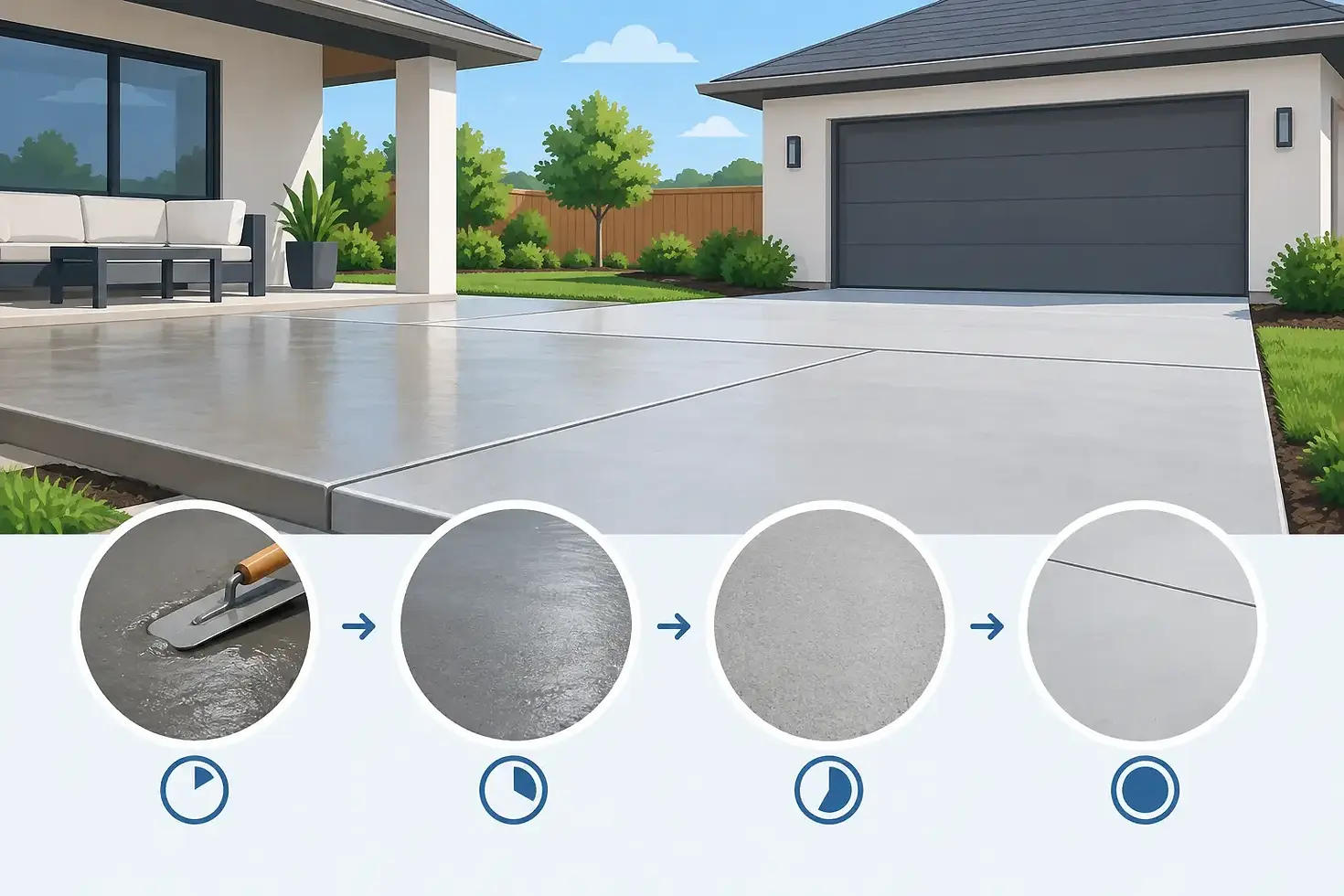
Concrete Curing Time Guide for Patios and Driveways
A new concrete patio can look finished within hours, but its most critical work is still happening below the surface. This concrete curing time guide explains when you can walk, place furniture, park, and fully enjoy new flatwork without sacrificing the strength, finish quality, and long-term value you paid for.
For homeowners in Snohomish County and the North Puget Sound area, curing deserves extra attention. Cool temperatures, rain, wind, and changing conditions can all affect the pace of a project. A professional installation accounts for those conditions, but protecting the concrete after placement is still part of building a driveway, patio, walkway, or outdoor living space that continues to make a strong impression years from now.
Concrete Curing Time Guide: The Milestones That Matter
Concrete does not simply dry. It hardens through a chemical reaction between cement and water called hydration. As hydration continues, the concrete gains strength. That is why a slab may feel hard enough to walk on the next day yet still be far from ready for a vehicle, heavy planter, hot tub, or construction equipment.
The following timeline is a practical rule of thumb for standard residential concrete. Exact timing can change with the concrete mix, slab thickness, reinforcement, finish, temperatures, moisture, and the loads the surface will carry.
First 24 to 48 hours: Keep it clear
Fresh concrete is especially vulnerable during its first two days. Avoid foot traffic unless the installer says otherwise, and keep pets, kids, furniture, ladders, and landscape crews away from the slab. A stray footprint or dragged hose can permanently mark an otherwise clean finish.
This is also when curing protection matters most. Depending on the project and weather, that may include a curing compound, plastic protection, damp curing methods, insulated blankets, or carefully timed watering. The right method is based on the finish and conditions. For example, exposed aggregate and decorative concrete may require a different approach than a simple broom-finished sidewalk.
After 48 hours: Light foot traffic may be possible
Many residential slabs can handle careful foot traffic after about 24 to 48 hours. That does not mean the surface is ready for normal use. Walk gently, avoid sharp heels, and do not drag furniture, grills, planters, or tools across it.
If rain is expected, do not assume rainwater improves the cure. A gentle rain after the surface has set may not be a problem, but heavy rain too soon can damage the finish, create discoloration, or weaken the surface paste. Newly placed concrete should be protected according to the installer’s plan.
Around 7 days: Stronger, but not fully cured
At approximately seven days, concrete often reaches a substantial portion of its design strength. A patio may be ready for lighter furniture if it is lifted into place rather than dragged, and a walkway can usually return to normal pedestrian use.
For driveways, seven days is still early. Passenger vehicles create concentrated loads at tires, turning points, and edges. Parking too soon can leave marks, chip an edge, or contribute to cracking that becomes more visible over time. If your new concrete includes a decorative finish, colored border, or custom saw-cut pattern, patience protects both performance and visual impact.
At 28 days: The standard curing benchmark
Twenty-eight days is the traditional benchmark for concrete to reach its specified design strength. It does not stop gaining strength after that point, but it is the milestone contractors and engineers commonly use when evaluating concrete performance.
For most residential driveways, waiting the full 28 days before regular vehicle traffic is the safest approach unless your contractor gives specific instructions for the mix and conditions used on your project. Heavy trucks, moving vans, RVs, dumpsters, and trailers may require a longer wait or a different placement plan, especially near slab edges.
Curing Is Not the Same as Drying
This distinction prevents many expensive mistakes. Drying is moisture leaving the slab. Curing is the process that allows cement and water to keep reacting and building strength. Concrete that dries too quickly can be weaker at the surface and more likely to develop shrinkage cracks.
That is why hot, dry, windy weather can be as challenging as rain. Wind pulls moisture from a slab quickly, even on a mild day. Direct sun can do the same. In cooler Northwest weather, the concern often shifts to low temperatures and slow strength gain. Concrete should not be allowed to freeze while it is young, because freezing can disrupt the developing internal structure.
A well-managed project balances protection with the chosen finish. Overwatering at the wrong time, covering the surface too early, or using a plastic sheet improperly can leave blotchy color or surface marks. This is one reason concrete work should be planned, placed, and cured by a team that understands both the material and the final look you want.
What Can Change Your Concrete Curing Time?
No calendar can replace project-specific guidance. A thin decorative patio, a thick driveway designed for vehicles, and a retaining-wall footing all have different demands. The most influential variables are temperature, mix design, moisture management, slab thickness, and expected traffic.
Temperature has a major effect. Concrete gains strength more slowly in cold conditions. When temperatures dip near freezing, protection becomes essential. During warmer stretches, concrete may set faster, but rapid moisture loss can create a different set of risks. The best installation window is not just about finding a dry day. It is about having a workable forecast and a curing plan for the days that follow.
The intended use also changes the answer. A backyard patio may only need to support furniture and foot traffic. A driveway must support vehicles repeatedly, including the stress of turning tires. A trash truck or moving truck is not a normal driveway load and should never be treated as one without discussing it in advance.
Concrete additives can influence setting and strength development as well. Accelerators may help in cooler weather, while retarders can extend working time in warm conditions. Those materials are tools, not shortcuts. They must be selected for the conditions, the finish, and the structural demands of the slab.
How to Protect New Concrete While It Cures
The easiest way to protect a new installation is to treat it as off-limits until the contractor provides clear release dates. Keep access routes blocked, tell family members and delivery drivers where not to step, and postpone landscaping tasks that could introduce dirt, mulch, irrigation water, or wheelbarrow traffic onto the slab.
Do not place rugs, planters, patio furniture, or grills on the surface early. Even when furniture seems lightweight, narrow feet can create pressure points. Dragging a chair can scratch a young surface, while trapped moisture beneath a rug can lead to uneven color during the early curing period.
For driveways, avoid parking near edges after the approved vehicle date as well. Concrete is strongest when loads are carried across the slab, not concentrated near an unsupported edge. Take care when turning a vehicle sharply in place, particularly during the first few weeks.
It is also smart to protect the concrete from staining while it develops. Leaves, wet soil, fertilizer, oil, and metal furniture can all leave marks. If a spill occurs, use the cleaning method your contractor recommends rather than reaching immediately for harsh acids or pressure washing equipment.
When Should Concrete Be Sealed?
Sealing is separate from curing. A sealer can help protect concrete from moisture intrusion, stains, deicing products, and everyday wear, but applying it before the slab is ready can trap moisture and affect appearance. The correct timing depends on the sealer type and the concrete system used.
For decorative finishes such as exposed aggregate, colored concrete, or a custom patio design, the sealer plays a meaningful role in color depth and surface protection. It should be chosen for the intended use. A patio sealer may prioritize appearance and cleanability, while a driveway sealer needs to handle tire traffic and weather exposure. Ask for a maintenance plan at project completion, including when to reseal and which products to avoid.
The Small Details That Protect a Big Investment
Cracks, joints, and edges deserve attention long after the curing period ends. Control joints are intentionally placed to encourage concrete to crack in planned locations as the slab naturally shrinks. They are not a sign that the work failed. They are part of a durable concrete design.
The goal is not to promise that concrete will never crack. The goal is to build proper base preparation, thickness, reinforcement where needed, drainage, joint layout, and curing practices into the project so the finished surface performs beautifully in real conditions. That is what turns a new slab into a lasting improvement rather than a short-term patch.
When Alfa Industries completes a concrete project, the final result is designed to feel like a true extension of the home - polished, useful, and built for daily life. Follow the curing instructions for your specific project, give the concrete the time it needs, and your new patio or driveway will be ready to welcome the moments it was built for.


Comments