Concrete Finishes That Transform Outdoor Spaces
A new concrete patio or driveway can change how a property feels before anyone reaches the front door. The right concrete finishes turn a functional surface into an intentional part of the landscape - one that supports everyday use, complements the home, and holds up through Northwest rain, shade, and changing seasons.
For homeowners in Snohomish County and the North Puget Sound area, the best finish is rarely just the one that looks best in a sample. It must also fit the location, drainage conditions, expected foot or vehicle traffic, maintenance preferences, and the character of the home. A bright, modern courtyard calls for something different than a long driveway, a poolside walkway, or a terraced backyard built around retaining walls and planting areas.
Why Concrete Finish Selection Matters
Concrete is often treated as a blank gray slab, but the finish is where it gains texture, movement, color, and personality. It also determines how the surface feels underfoot, how it handles moisture, how visible dirt and leaves will be, and how much traction it provides when wet.
This is especially relevant in Western Washington. Frequent rainfall makes slip resistance and drainage practical design decisions, not afterthoughts. A finish with more texture may be the smarter choice near entryways, sloped walkways, and outdoor gathering spaces, while a more refined decorative finish may be ideal for a covered patio or a feature area with controlled drainage.
A quality result begins well before the final surface treatment. Proper excavation, compacted base material, grading, reinforcement, placement, joint layout, and curing all affect whether concrete stays attractive and performs as intended. The finish is the visible layer, but it needs a well-built foundation underneath it.
Popular Concrete Finishes for Patios, Driveways, and Walkways
Broom finish: clean, dependable, and practical
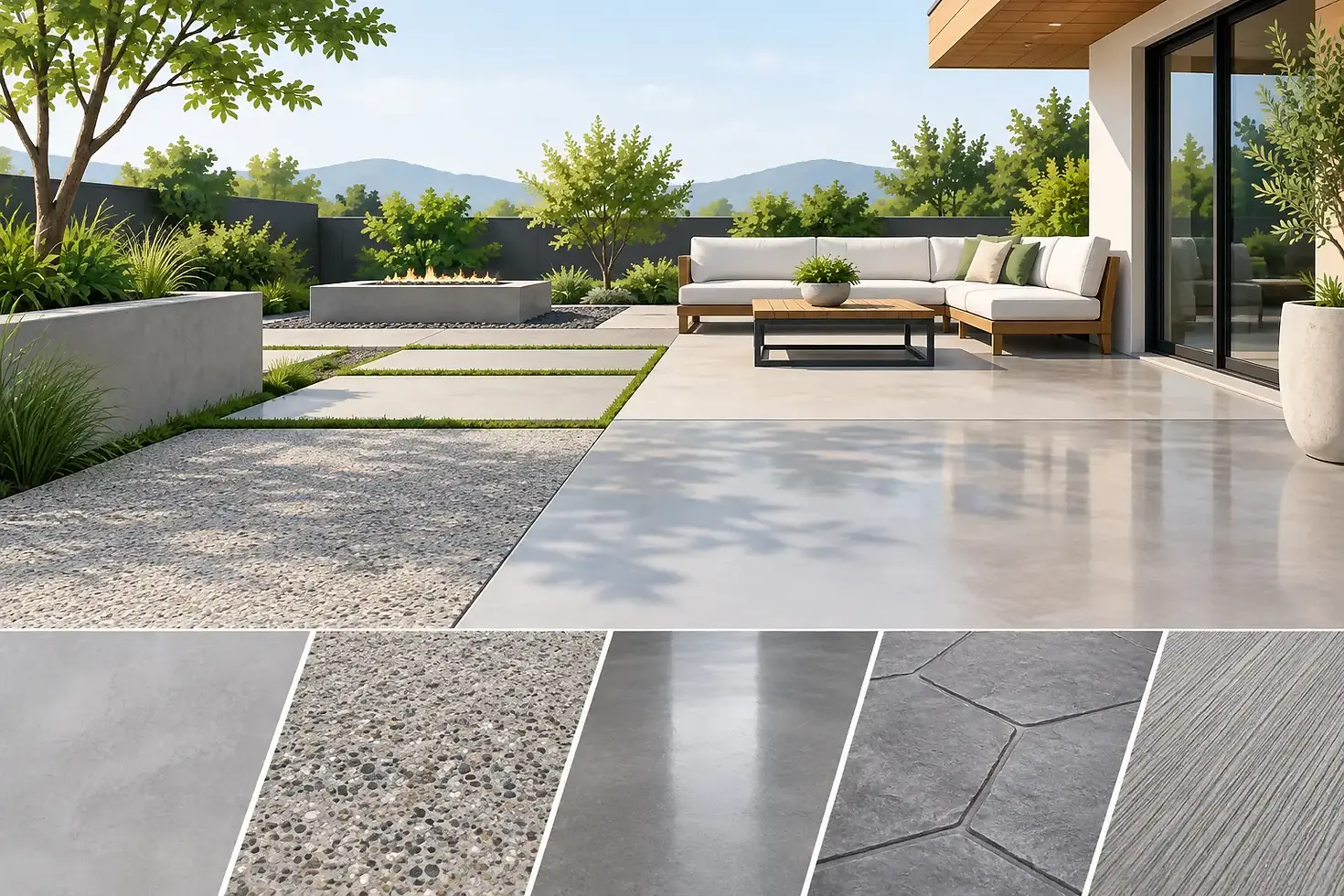
A broom finish is created by drawing a specialized broom across fresh concrete, leaving subtle linear texture. It is one of the most popular choices for driveways, sidewalks, walkways, and utility areas because it adds traction without looking overly rough.
For a driveway, broom-finished concrete offers a crisp, clean appearance that works with nearly any architectural style. The texture is functional in wet conditions, and it is generally easier to maintain than highly detailed decorative surfaces. The trade-off is that it delivers a more classic, understated look than stamped or exposed aggregate concrete.
The direction of the broom lines matters too. On a walkway or slope, lines are typically placed perpendicular to travel to improve footing. Small details like this help a finished project look considered rather than standard.
Exposed aggregate: natural texture with visual depth
Exposed aggregate reveals selected stone within the concrete surface after the top layer of cement paste is removed. The result has depth, natural variation, and a more custom appearance than a conventional broom finish. It can feel at home beside stone retaining walls, landscaped borders, wood siding, and mature Northwest gardens.
This finish is a strong option for patios, walkways, courtyards, and feature sections of a driveway. Its textured surface also provides helpful traction. Because aggregate color and size can be selected to complement the home, exposed aggregate gives homeowners a chance to create a surface that feels more connected to the rest of the property.
It does require thoughtful installation and care. The surface needs to be washed and sealed correctly, and occasional resealing can help preserve color and protect against staining. For clients who want a high-impact upgrade without introducing pavers throughout the entire space, exposed aggregate can deliver a strong visual return.
Sandy finish: soft texture for modern outdoor spaces
A sandy finish has a fine, lightly textured appearance that is more refined than a broom finish but still practical for outdoor living areas. It is often a good match for contemporary patios, walkways, and integrated hardscape designs where the goal is a clean surface with a subtle tactile quality.
The appeal is in its restraint. Rather than competing with furniture, planting, fire features, or a statement retaining wall, a sandy finish creates a calm background that still feels designed. It can also be paired with integral color, saw-cut joints, or paver borders for a tailored look.
As with any finish, placement matters. A sandy finish may be excellent for a protected patio but less appropriate for a steep, heavily traveled approach where maximum traction is the priority.
Stamped concrete: pattern and color without individual pavers
Stamped concrete is designed to resemble materials such as natural stone, slate, brick, or wood planks. With the right pattern, color release, and border details, it can create a dramatic patio, entry, or outdoor entertainment space with a continuous concrete base.
It is a good option for homeowners who want stronger pattern and visual movement than plain flatwork provides. Stamped concrete can help define separate zones in a large backyard, create a formal front entry, or bring warmth to an outdoor space where a single-color slab would feel too plain.
There are trade-offs. Deeply textured stamped finishes require careful sealing and may need periodic maintenance to keep their color and definition looking sharp. Some patterns can also feel busy on a small space, especially when surrounding materials already include strong texture. A good design considers the house, landscape, and viewing distance before choosing the pattern.
Smooth or troweled concrete: refined, but location-dependent
A smooth, troweled surface creates a sleek, contemporary look. It works well in covered areas, interior-adjacent spaces, or locations where a polished visual effect matters more than traction. It can make a modern patio feel expansive and clean, particularly when paired with simple planting and architectural lighting.
For exposed exterior walkways, however, a very smooth finish may become slippery when wet. This is where design should follow real-life use. A surface that photographs beautifully is not automatically the right choice for a front path used by family, guests, and delivery drivers through rainy months.
Choosing the Right Finish for Your Property
Start with how the space will work. A driveway needs to withstand vehicle loads, tire traffic, and seasonal debris. A patio needs to support furniture, entertaining, and easy movement. A walkway needs clear traction and a logical connection between areas of the property.
Then consider the home’s style. Traditional homes often pair well with exposed aggregate, brick-inspired stamped patterns, or simple broom finishes with decorative borders. Modern homes can look exceptional with sandy finishes, clean saw-cut control joints, integral gray tones, and large geometric concrete panels. For a more layered outdoor design, concrete can be combined with interlocking pavers, retaining walls, turf, gravel, or landscape planting.
Color should be chosen with the same care. Natural gray is timeless, but warm taupe, charcoal, sand, and earth tones can better connect a hardscape to siding, stone, roofing, and the surrounding landscape. Lighter finishes may stay more comfortable under direct summer sun, while darker finishes can create a stronger visual frame but may show dust or pollen more easily.
Details That Separate Basic Flatwork From a Finished Design
The strongest concrete projects are planned as part of the whole property. Control joints can be arranged in intentional patterns rather than appearing as random lines. Borders can define a patio edge. Steps can align with doors and paths. Drainage can move water away from the home without making the slope feel noticeable underfoot.
Transitions matter as well. A concrete driveway that meets an asphalt approach, a paver landing that leads to a patio, or a retaining wall that frames a new walkway all need precise elevations and clean connections. These are the details that protect long-term performance while giving the project its polished look.
At Alfa Industries, flatwork is approached as both construction and design. The goal is not simply to pour concrete. It is to create a surface that fits the property, supports the way you live, and delivers the finished result promised at the start.
Protecting the Appearance of Decorative Concrete
Most exterior concrete benefits from routine cleaning and attention to drainage. Sweep leaves, soil, and standing water away before organic debris can stain the surface. Use products intended for concrete when cleaning, and avoid harsh chemicals that may damage sealers or alter decorative color.
Sealing schedules depend on the finish, exposure, and level of traffic. Exposed aggregate and stamped concrete commonly benefit from resealing to refresh protection and appearance. Plain broom-finished concrete may need less cosmetic attention, but it still benefits from a well-managed surface and sound drainage.
It is also wise to avoid de-icing products that can be hard on concrete, particularly during its early life. If winter traction is needed, choose materials suited to concrete and follow the installer’s care guidance.
The best concrete finish is one you will enjoy seeing every day and trust using in every season. Whether your project calls for a hardworking driveway, a welcoming front walk, or a backyard patio built for long summer evenings, thoughtful design and skilled installation can make the space feel like it has always belonged to your home. Get your custom design started with a finish that brings out the best in your property.


Comments