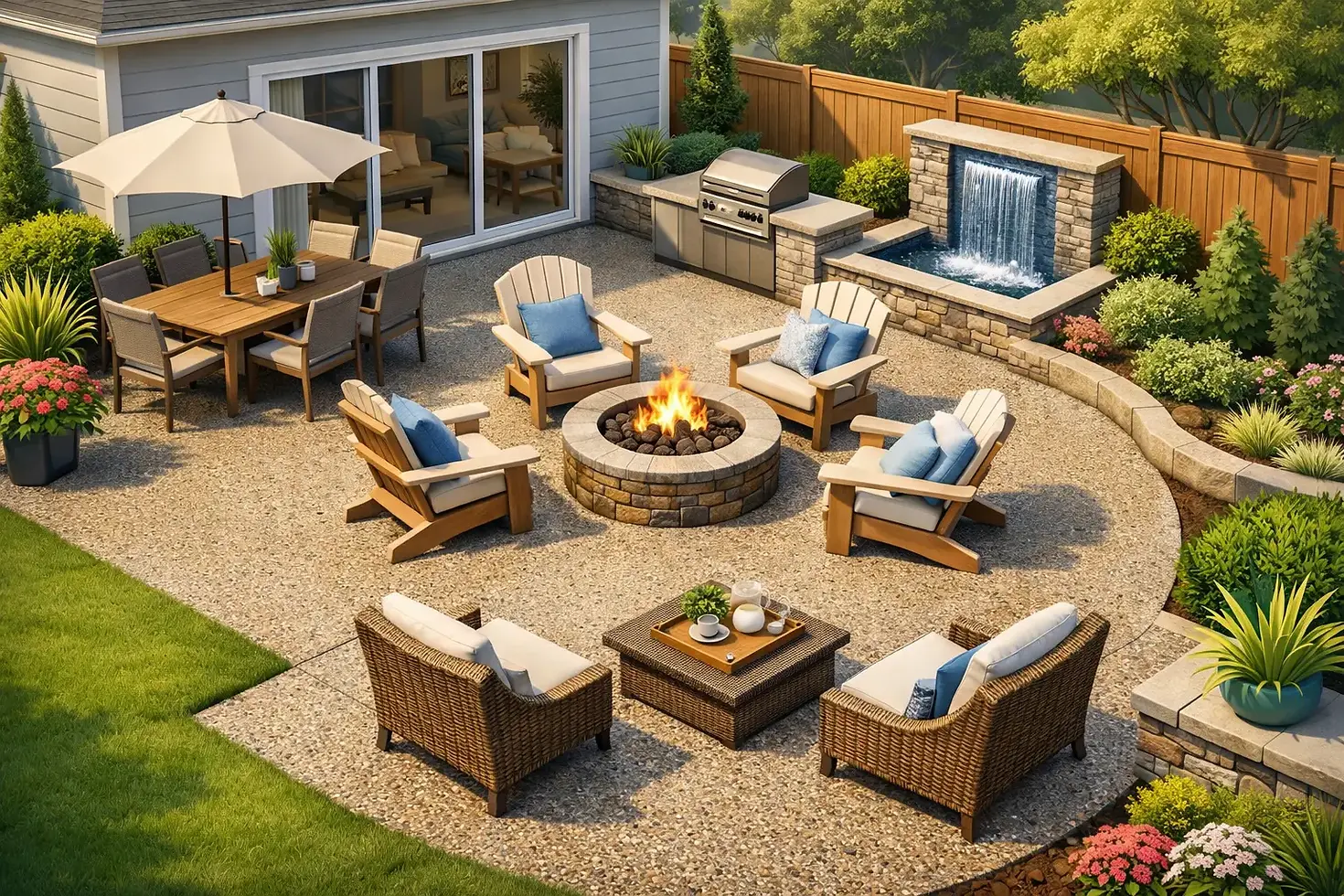
Exposed Aggregate Patio Marysville Homeowners Love
A patio should feel like an extension of the home, not a gray slab placed behind it. For homeowners planning an exposed aggregate patio Marysville project, the finish offers something more memorable: natural stone texture, slip-resistant footing, and a custom appearance that stands up to real Northwest weather. It can turn an underused backyard, side yard, or sloped outdoor area into a place built for morning coffee, family dinners, and weekends outside.
Exposed aggregate is not simply decorative concrete. The quality of the final surface depends on thoughtful design, proper base preparation, correct concrete placement, and precise timing during the finishing process. When those details are managed well, the result is a hardscape feature with texture, visual depth, and long-term value.
Why Exposed Aggregate Fits Marysville Outdoor Living
Marysville homes experience plenty of rain, cool seasons, and changing ground conditions. Those realities affect every outdoor project. A patio needs more than good looks. It needs drainage that moves water away from the home, a stable base that resists settlement, and a surface that remains comfortable and dependable through wet months.
Exposed aggregate is a strong option because the visible stone creates natural traction. Compared with smooth or heavily troweled concrete, it gives homeowners more secure footing when the surface is damp. That matters around grill stations, covered patios, backyard doors, pool-adjacent spaces, and walkways connecting the house to the yard.
The finish also brings color and character without requiring a complicated pattern. Once the top layer of cement paste is removed, the selected aggregate becomes the visual focus. Depending on the stone blend, the patio can lean warm and natural, clean and contemporary, or richly textured enough to complement a wooded landscape. It is a practical surface, but it never has to look basic.
The Difference Is in the Aggregate and the Design
Not every exposed aggregate patio looks alike, and that is one of its biggest advantages. The stone size, color mix, border treatment, patio shape, and surrounding hardscape all influence the final look. A smaller aggregate often creates a refined, consistent texture, while larger stone has a bolder, more organic presence.
For a traditional Marysville property, earth-toned aggregate can pair beautifully with retaining walls, cedar fencing, lawn areas, and planted beds. A more modern home may look best with a cooler stone blend, crisp saw-cut joints, and a defined concrete border. The patio can also connect visually to a driveway, front walk, or entry landing without making the entire property feel overly matched.
Borders deserve special attention. A broom-finished perimeter, smooth concrete band, paver accent, or contrasting color can frame the exposed aggregate and make the patio feel intentionally designed. This is especially valuable on larger outdoor spaces, where a border adds structure and helps define dining, seating, or fire-pit areas.
Site Preparation Protects the Investment
The surface is what guests notice, but the work underneath determines whether the patio performs for years. Northwest soils, existing grades, drainage paths, and access conditions should all be evaluated before concrete arrives. A beautiful finish cannot compensate for poor preparation.
A professionally managed project begins by establishing the patio elevation and slope. Water should drain away from the house and avoid pooling near doors, foundations, or low points in the yard. In some properties, this means reshaping the surrounding grade. In others, it may mean adding drainage features, retaining elements, or a transition between the patio and lawn.
The excavated area needs a compacted base sized for the site and intended use. Patios do not carry vehicle traffic, but they still need support that limits movement, cracking, and uneven settlement. Edges, transitions, and areas near downspouts require particular care because water can weaken poorly prepared soil over time.
Concrete thickness, reinforcement, control joints, and access for installation are also part of the plan. Control joints do not guarantee that concrete will never crack. Concrete naturally shrinks as it cures, and cracking is always a possibility. Proper joint placement helps guide that movement into planned lines rather than allowing random cracks to become the main visual feature.
What the Installation Process Looks Like
Exposed aggregate takes skill because the finish happens within a narrow working window. After the concrete is placed, leveled, and prepared, a surface retarder is applied to delay the set of the top cement paste. Once the concrete has reached the right stage, the surface is washed to reveal the aggregate beneath.
Wash too early, and the stones may loosen or the finish can look uneven. Wash too late, and too much paste remains on the surface, leaving the aggregate less visible than intended. Weather, concrete mix, shade, sun exposure, and jobsite conditions all affect timing. This is why exposed aggregate should be treated as a finish specialty, not an afterthought.
After washing and curing, the patio may be sealed to help enrich its appearance and protect the surface from staining and weather exposure. The right sealer depends on the desired sheen and the patio's conditions. A high-gloss look can add visual pop, but it may not suit every home or every wet-area application. Many homeowners prefer a more natural finish that lets the stone texture remain the focal point.
Planning a Patio That Gets Used
The best patio size is not determined only by the open space available. It depends on how the household plans to live outside. A compact seating area may need room for two chairs and a small table. A family entertaining space needs clear circulation around a dining table, grill, and access door. If a fire feature, pergola, outdoor kitchen, or hot tub is part of the vision, those elements should be planned before the concrete shape is finalized.
Think about the view from inside the home as well. A patio often becomes the visual anchor of a backyard when seen through kitchen, living room, or family room windows. A curved edge can soften a lawn-focused landscape, while clean rectangular geometry can reinforce a more contemporary exterior.
Sun and shade matter, too. A south-facing patio may be ideal for spring and fall but benefit from a pergola or shade structure during warmer afternoons. A covered patio near the home can make outdoor use more realistic during light rain. The goal is not just to install concrete. It is to create a setting that draws people outside more often.
Maintenance Is Simple, Not Zero
One reason homeowners choose exposed aggregate is that it provides a premium look without demanding constant upkeep. Still, every exterior hardscape benefits from basic care. Sweep away leaves and organic debris, rinse off seasonal dirt, and address food or beverage spills before they have time to set.
Periodic resealing can help preserve color, reduce stain absorption, and refresh the patio's finished appearance. The schedule depends on the sealer, sun exposure, drainage, and level of use. A contractor can recommend an appropriate maintenance approach based on the specific finish selected.
Avoid aggressive deicing products during freezing conditions, especially those that can damage concrete surfaces. Use products suitable for concrete when needed, and do not rely on metal shovels that can scratch or chip the exposed stone. If moss develops in shaded areas, address it early with appropriate cleaning methods rather than allowing it to build up and make the surface slick.
Is Exposed Aggregate the Right Choice for Your Property?
Exposed aggregate is a great fit for homeowners who want texture, character, and secure footing in one surface. It is especially effective for patios that need to feel more custom than standard broom-finished concrete while staying lower maintenance than many natural-stone installations.
It may not be the first choice for every project. Homeowners who want a perfectly smooth modern surface might prefer a different concrete finish. Those seeking intricate geometry or easy spot repair may be better served by interlocking pavers. Budget also plays a role, since exposed aggregate requires additional finishing skill and careful material selection. The right answer depends on the home's architecture, the condition of the site, and the experience you want from the finished outdoor space.
A well-designed patio can also solve bigger property challenges. It can create level usable space on a difficult grade, establish a clean transition from house to landscape, and give an aging backyard a clear purpose. At Alfa Industries, we design and build on what we promise, with custom hardscape work that respects the details beneath the surface as much as the WOW! factor above it.
Start with how you want to use the space, then let the design follow. A patio built around your daily routines, your property's drainage needs, and the character of your home will keep earning its place long after the concrete has cured. Get your free custom design today and turn the backyard into a space that welcomes you home.


Comments