Interlocking Paver Patio Installation That Lasts
A patio should not become the part of your yard you avoid after the first hard rain. In Snohomish County, an interlocking paver patio installation has to do more than look beautiful on a sunny afternoon. It needs a stable base, thoughtful drainage, clean edges, and a design that makes the space feel like a true extension of your home.
The right paver patio can turn an uneven lawn, muddy side yard, or underused backyard corner into a place for morning coffee, family dinners, fire pits, and weekends with friends. The difference is not simply the paver color or pattern. It is the preparation underneath every finished surface.
Start With How You Want to Use the Space
Before selecting materials, consider what the patio needs to do for your household. A compact dining area has different requirements than a large entertaining space with a grill station, outdoor kitchen, seating wall, and fire feature. The layout should support how people actually move through the yard, not just fill an open area.
A well-planned patio often creates connections: from the back door to the seating area, from the driveway to a side entrance, or from a lawn to a terraced section of the property. On sloped lots, the patio may need to work alongside retaining walls, steps, or landscape grading to create safe, usable land. Planning those elements together gives the finished project a more intentional look and helps prevent costly changes once construction begins.
Size matters, but proportion matters too. A patio that is too small can feel crowded as soon as furniture arrives. One that is oversized for the yard can make the landscape feel hard and uninviting. The goal is a balanced outdoor room with enough circulation around tables, chairs, grills, and gathering areas.
Why Base Preparation Makes or Breaks the Patio
Pavers are only as dependable as the foundation beneath them. This is where professional installation protects your investment. A beautiful pattern cannot compensate for inadequate excavation, weak base material, poor compaction, or drainage that sends water toward the house.
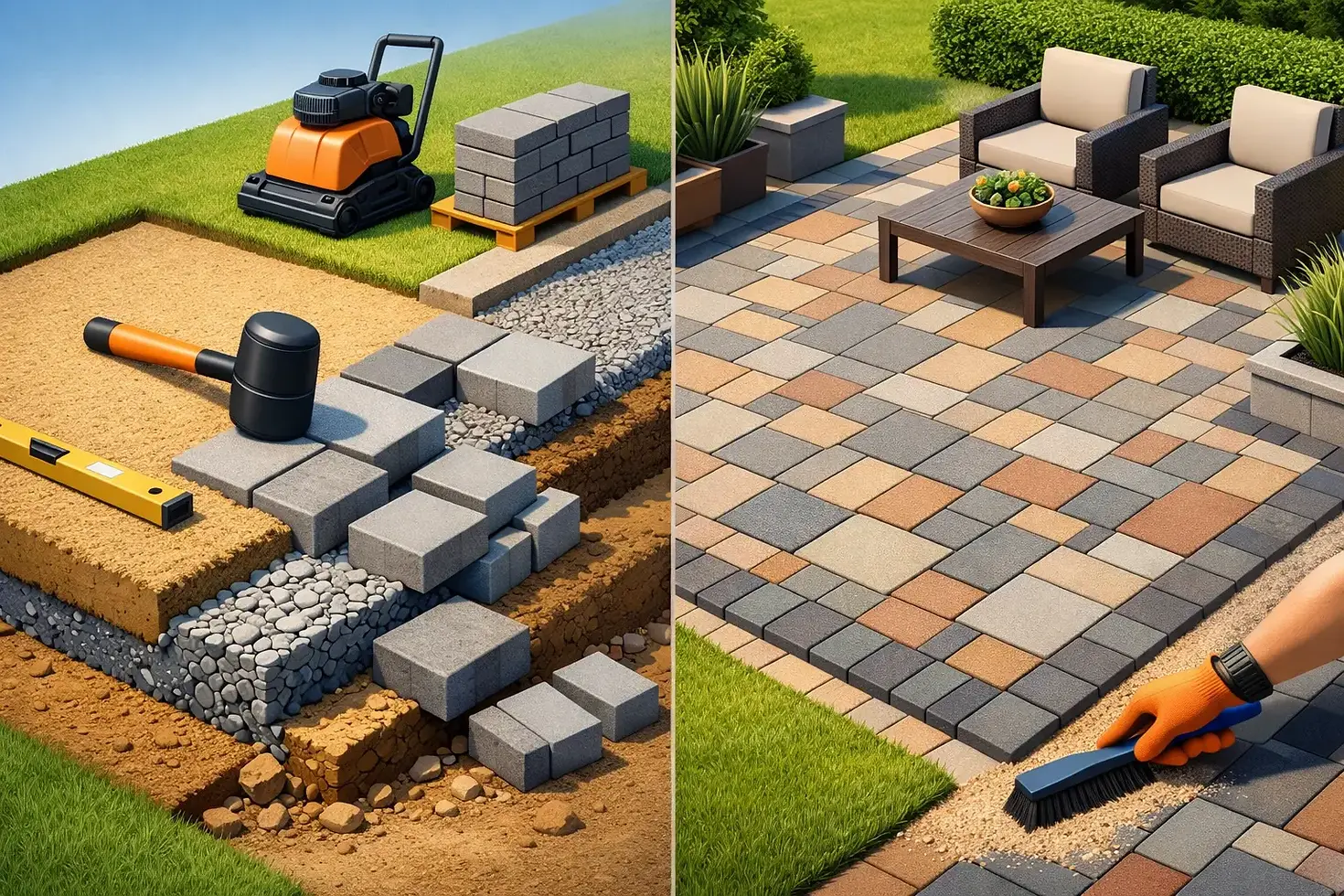
For an interlocking paver patio installation, the work generally begins with establishing the correct finished elevation and slope. Water should move away from the home and out of the patio area without creating erosion, pooling, or soggy planting beds. In the Pacific Northwest, where wet weather is a regular part of the year, drainage planning is not an upgrade. It is part of building a patio that performs.
The crew then excavates to accommodate a compacted aggregate base, bedding layer, and the pavers themselves. Base depth depends on site conditions, soil, grade, intended use, and whether the patio connects to other hardscape features. Soft soils, areas with persistent moisture, and properties with drainage concerns may need additional attention before the first paver is installed.
Compaction is equally critical. Aggregate is placed in controlled lifts and compacted to create a firm, level foundation. Skipping this discipline can lead to settling, uneven joints, low spots, and pavers that shift over time. The finished patio should feel solid underfoot because the structure below it is solid.
Edge Restraints Keep the Pattern Locked In
Interlocking pavers distribute loads across the surface, but they still need secure edge restraints. These restraints hold the field of pavers in place and prevent the outside rows from migrating outward. Without them, joints can widen and the crisp geometry of the patio can slowly disappear.
Properly installed edge restraints are a small detail with a major impact. They help the patio maintain its shape through seasonal changes, foot traffic, and years of outdoor use.
Choose Pavers That Fit the Home, Not Just the Sample Board
Pavers offer more design flexibility than a single poured surface. Homeowners can choose from traditional rectangular layouts, modern large-format styles, textured finishes, mixed-size patterns, contrasting borders, and color blends that complement siding, stone, roofing, or existing concrete.
A warm earth-tone paver can make a backyard feel grounded and welcoming. Gray and charcoal combinations can give a newer home a sharper, more contemporary appearance. A contrasting border can define the patio perimeter, frame a fire pit zone, or create a clean transition to steps and walkways.
The best choice depends on the architecture of the home and the visual character of the property. A busy multicolor blend may suit a rustic landscape, while a simpler pattern often feels stronger around a modern exterior. This is also where a custom design consultation helps homeowners see the whole composition before construction begins.
Do not overlook texture. Some pavers have a smoother, more refined face, while others offer more texture and visual movement. For areas that stay damp or receive frequent use, traction and ease of cleaning deserve consideration alongside appearance.
Design for Snohomish County Weather and Grade
North Puget Sound properties bring real opportunities for outdoor living, but they also bring rain, varied soil conditions, and yards with challenging slopes. The patio design should respond to those conditions rather than fight them.
Drainage may involve careful surface grading, perimeter collection points, drainage rock, or coordination with surrounding landscape features. The right approach depends on where water originates, where it naturally wants to travel, and what sits around the patio. A patio near a foundation, basement access, retaining wall, or low-lying lawn deserves especially careful evaluation.
Sloped yards can become some of the most impressive transformations. Retaining walls can create level patio terraces, define planting areas, and turn difficult grades into purposeful outdoor zones. Steps should be sized and positioned for comfortable movement, while lighting and clear edges improve safety after dark.
This is not a place for a one-size-fits-all plan. The same paver system may need a different base, drainage strategy, or wall connection from one Marysville backyard to the next. Good hardscape work is responsive to the property in front of it.
The Installation Details Homeowners Notice Later
The strongest patio projects are built with an eye for both immediate visual impact and long-term performance. Once the base is prepared and edge restraints are secured, installers set the pavers in the selected pattern, maintaining consistent joint lines and checking the surface for alignment and grade.
After the pavers are cut and fitted around borders, steps, posts, or curves, joint sand is swept into the spaces between them. Depending on the selected system, polymeric sand may be used to help stabilize joints and reduce weed growth. It is not a substitute for a proper base, but it supports the interlocking system and creates a cleaner finished appearance.
Clean transitions are another mark of quality. A patio should meet the lawn, garden beds, walkways, and home exterior with purpose. Awkward gaps, abrupt elevation changes, and poorly resolved corners can make even premium materials look unfinished. Thoughtful details are what create the WOW factor from every angle.
Maintenance Is Simple, but It Is Not Zero
One reason homeowners choose pavers is the ability to repair a localized area if needed. Unlike a cracked slab, individual pavers can often be lifted, the base corrected, and the surface reset. That flexibility is valuable, particularly around utilities, drains, or areas that may need future access.
Still, pavers benefit from basic care. Sweep away debris, rinse off seasonal dirt, and address moss or algae before it becomes established in shaded locations. Watch for joint sand loss after heavy weather and refresh it when necessary. Sealing is optional and depends on the paver product and the finish you want. It can enrich color and help with stain resistance, but it should be applied only after the patio is properly cleaned, dry, and ready.
Avoid treating maintenance as an afterthought. A few routine habits preserve the clean lines and color variation that made the patio appealing in the first place.
Invest in a Patio That Feels Built for Your Property
A paver patio is more than a flat place to set furniture. It can organize the backyard, improve access, support better drainage, and give your home a more finished, valuable appearance. When it is designed around your lifestyle and built on a disciplined foundation, it becomes part of how you enjoy the property every day.
At Alfa Industries, we design and build on what we promise, from the first custom layout through the finished hardscape details. If your yard has untapped potential, start by looking at the view from your back door and imagining a space that finally invites you outside.


Comments