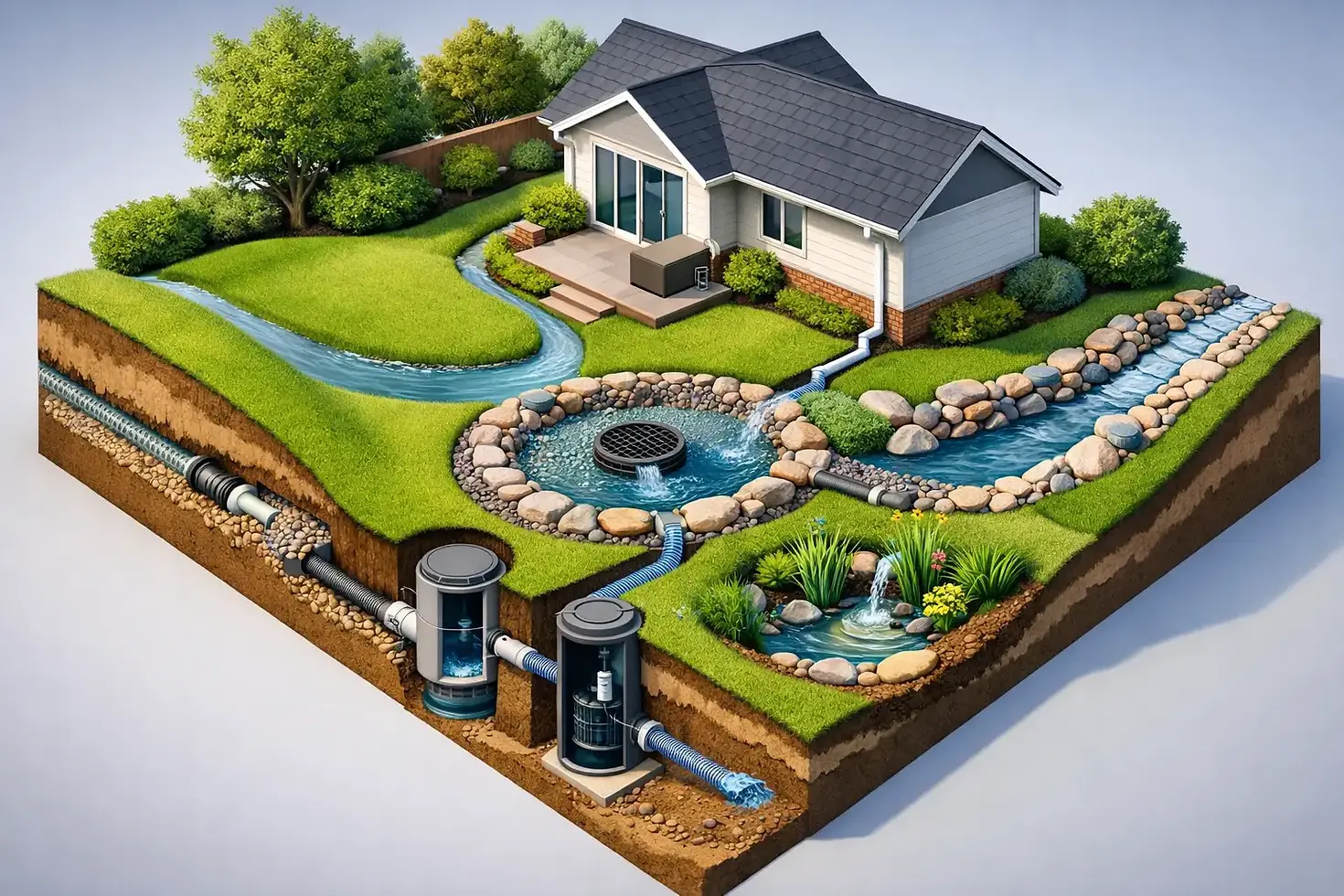
Yard Grading and Drainage Solutions That Last
A beautiful patio, driveway, or lawn can lose its impact fast when winter rain pools against the home, washes soil from a slope, or turns a side yard into mud. In Snohomish County, yard grading and drainage solutions are not background work. They are the foundation of an outdoor space that stays safe, attractive, and usable through the wettest months of the year.
The right plan does more than send water away. It protects foundations, preserves concrete and pavement, supports retaining walls, and makes room for the outdoor features your family actually wants to use. That could mean a level lawn for play, a dry path to the gate, a patio that drains cleanly, or a terraced yard that finally feels like part of your home instead of a maintenance problem.
Why Water Problems Often Start With Grade
Every yard has a direction. Rainwater follows the lowest available path, whether that path leads toward a swale, a storm drain, a neighbor's property, or the base of your home. When the grade is flat in the wrong place, slopes toward the house, or has low pockets created by settling, water has nowhere productive to go.
That is why a drainage issue is often more than a drain issue. Adding a catch basin to a poorly shaped yard may collect water at one point, but it does not correct the broader movement of runoff. Proper grading shapes the land so water moves intentionally, while drainage components collect, carry, and release it where appropriate.
Warning signs are easy to overlook at first: standing water that remains more than a day after rain, mossy concrete, soggy lawn sections, exposed roots, eroding mulch, or water marks along a foundation. A driveway that holds water at the garage threshold or a patio that sends runoff toward the house deserves attention before freeze-thaw cycles, soil movement, and repeated saturation create more expensive repairs.
Start With a Site-Specific Drainage Plan
A strong plan begins by looking at the entire property, not just the puddle that prompted the call. The shape of the lot, existing downspouts, roof runoff, soil conditions, neighboring grades, hardscape elevations, and planned improvements all matter. A solution that works in a broad, open yard may not work on a compact Marysville lot with limited outlet options or near a steep backyard slope.
The goal is controlled water movement. On some properties, that means regrading soil to establish positive drainage away from the foundation. On others, it means combining new grade with trench drains, French drains, catch basins, or buried downspout lines. The most effective answer is frequently a coordinated system rather than one product installed in isolation.
Local conditions also shape the design. North Puget Sound rain can be steady, persistent, and hard on poorly compacted soil. Clay-heavy areas may drain slowly. Mature trees, utilities, property lines, and existing structures can limit where water can travel. A professional assessment identifies those constraints early, so the finished yard looks intentional instead of patched together after the next big storm.
Positive Grading Protects the Home First
Positive grading means the ground immediately around the home is shaped to direct surface water away from the foundation. This sounds simple, but it requires precision when patios, walkways, steps, landscaping, and door thresholds are already in place.
The grade must be noticeable enough to move water but natural enough to complement the property. Too little fall can leave damp areas along the house. Too much abrupt slope can make planting beds difficult to maintain, expose foundation areas, or create an awkward transition to a lawn or patio. The best work balances drainage performance with a finished appearance that fits the architecture and landscape.
Drainage Systems Move What Grade Cannot
Subsurface drainage is valuable where water collects below the surface or where site constraints prevent broad regrading. A French drain can intercept groundwater and reduce saturation in a lawn or at the base of a slope. Catch basins help collect surface runoff at low points. Channel drains are often a smart choice at garage entries, patio edges, or transitions between paving and landscape.
Each option has a job to do. A drain without sufficient slope can clog or hold water. A drain installed without proper outlet planning can simply shift the problem. And a system that is hidden below a finished lawn still needs accessible cleanouts or thoughtful maintenance planning. Good drainage should be easy to live with, not another mystery beneath the yard.
Pair Yard Grading and Drainage Solutions With Hardscapes
Concrete, pavers, asphalt, and retaining walls should be planned with drainage from the beginning. These surfaces are durable investments, but their finished elevations change how water moves across the property. A new driveway can send a larger volume of runoff toward a side yard. A patio can become a collection point if its slope and perimeter drainage are not designed correctly.
For concrete flatwork, the finish grade and pitch are as important as the surface color or texture. Broom-finished concrete, exposed aggregate, and decorative finishes can all perform beautifully when the slab directs water away from structures and avoids trapping it near steps or doors. The same is true for interlocking pavers. Their joint system and base construction require careful preparation so the surface remains stable and drains as intended.
Retaining walls deserve special attention. A wall holds back soil, but it also must manage the water within that soil. Without proper base preparation, drainage aggregate, drain pipe, and suitable outlets, hydrostatic pressure can build behind the wall. That pressure can lead to staining, movement, cracking, or premature failure. The visible wall face may be the feature homeowners notice, but the drainage work behind it protects the investment.
Make a Sloped Yard More Usable
A sloped lot does not have to remain an underused part of the property. With smart grading, retaining walls, stair access, and drainage control, a difficult backyard can become a series of useful outdoor spaces. A terrace can create a patio zone near the home, a level lawn below, planting areas along the edges, and clear pathways between each area.
This approach is especially valuable when a homeowner wants both function and visual impact. Instead of trying to force one broad, flat surface onto a changing grade, terraced design works with the land. It can create definition, improve access, and give the yard a custom-built appearance.
There are trade-offs. Retaining walls and engineered drainage add upfront cost, especially where significant elevation changes, soils, or permit requirements are involved. But trying to solve a major slope problem with surface mulch, a few plants, or repeated lawn repairs often costs more over time and still leaves the yard hard to enjoy. The right scope depends on the property, the intended use, and the level of long-term durability you expect.
Avoid Quick Fixes That Create Bigger Problems
It is tempting to fill a low spot with topsoil, extend a downspout across the lawn, or install a drain where water is visible. Those measures may offer short-term relief, but they can also conceal the actual issue.
Avoid directing runoff toward a neighbor's lot, discharging water near a foundation, or placing impermeable surfaces without a plan for the additional runoff. Do not assume a freshly graded yard is finished before the soil is properly compacted and stabilized with lawn, planting, rock, or other suitable cover. Bare soil can erode quickly in heavy rain, undoing the shape that was just created.
Drainage improvements also need to respect future projects. If you expect to add a patio, driveway expansion, outdoor kitchen, or retaining wall later, mention it during the planning stage. It is far more efficient to coordinate pipe routes, elevations, and drainage zones before new hardscape is installed.
Build for the Rain and the Life You Want Outside
The best yard improvement does not make drainage the focal point. It makes drainage disappear into a property that works better every day. Paths stay cleaner, lawns recover faster, patios feel more inviting, and water moves where it belongs instead of dictating how you use your home.
At Alfa Industries, we design and build on what we promise. A custom grading and drainage plan can be the first step toward the driveway, patio, retaining wall, or complete landscape transformation you have been picturing. Get your custom design with the full property in mind, and give every finished surface a foundation built to handle the seasons ahead.


Comments